
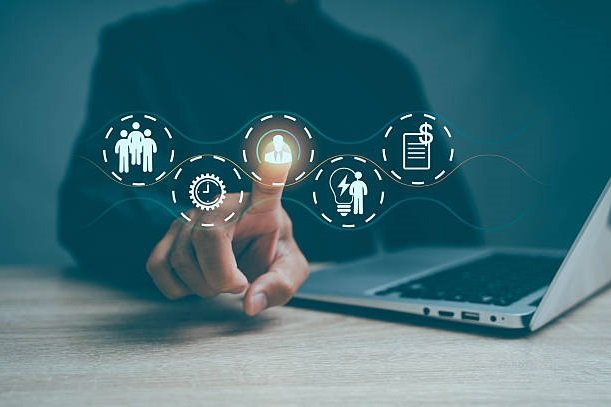






Human resources is evolving fast as companies embrace automation, cloud computing, data analytics, and artificial intelligence. In this wider shift, the term HRMtaila has recently emerged online to describe AI-enabled human resource management. It is usually explained in terms of recruiting, employee assistance, onboarding, workforce analytics, training, and other day-to-day HR tasks.
But there is an important distinction to be made. Currently, HRMtaila does not seem to have a broadly accepted definition or strong evidence in the public domain that it is a proven commercial HR software platform. Recent papers use the word mostly as an emergent notion to combine AI with digital HR operations.
This makes HRMtaila an interesting issue for both business and HR professionals. Rather than believing that it is a specific product with known features and pricing, it is more valuable to grasp the idea behind the phrase and how AI is already revolutionising human resource management.
What Is HRMtaila?
HRMtaila could be viewed as a developing term for AI-driven human resource management. In practical terms, it means the idea of accelerating and organising typical HR operations with the use of artificial intelligence, automation, employee data, and digital workflows.
For a long time, traditional HR departments have been busy doing tedious administrative labour. This can entail processing applicants, scheduling interviews, sending onboarding documents, answering FAQs, tracking training, preparing reports, and managing employee information.
Some of these activities can be automated through an AI-enabled HR environment. The technology does not replace HR personnel, but acts as an assistant that takes care of ordinary work while people remain responsible for crucial decisions.
This human-centered approach is critical since HR decisions can affect employment, career growth, salary, privacy, and workplace relationships.
Is HRMtaila a Real HR Software Product?
It’s one of the most important questions concerning the phrase.
At this time, available information does not strongly indicate that HRMtaila is a widely established commercial software platform with a clearly known developer, official product documentation, a verified client base, public pricing, or independently published technical specifications. In some recent papers, it is described as an emergent concept, not as an established software brand.
Therefore, firms should be vigilant when researching anything that is clearly advertized as a “HRMtaila platform.” A corporation should vet the provider, security documents, privacy procedures, product demos, customer references, and legal conditions before entering employee information into any HR system.
But the larger technology underpinning the idea is real. Many HR activities are already investigating and applying AI.
How AI Is Changing Human Resource Management
Artificial intelligence can scan enormous volumes of information, find patterns in this information, automate repetitive tasks, and make recommendations. These talents can be valuable in HR if they are used with care.
Artificial intelligence can help with applicant communications, resume screening, interview scheduling, employee queries, training recommendations, workforce reporting, and skills analysis.
In 2026, Social Sciences & Humanities Open published a review of 93 studies on AI in human resource management. The evaluation found possible benefits including simpler processes, time savings, real-time information, uniformity, and better workforce analysis. It also found concerns like bias, privacy, security, lack of transparency, wrong AI output, integration issues, and less human engagement.
When you talk about HRMtaila, this is an important balance. “AI can help HR work more efficiently, but efficiency alone doesn’t make a good HR system.”
HRMtaila and Recruitment
One area where AI-powered HR solutions might provide practical aid is recruitment.
“So, a company might get hundreds of applications for one position,” he said. HR employees are responsible for reviewing resumes, sorting candidates, communicating with applicants, scheduling interviews, and updating hiring records. When these activities are done manually, they might be time-consuming.
A system like HRMtaila might assist with these repetitive chores such as sorting applications, finding relevant talent, producing communication drafts, arranging interviews, and tracking prospects through various phases.
However, computerised applicant screening must be closely monitored. A system can misinterpret experience, fail to identify transferable talents, or replicate the biases embedded in its training data or architecture.
That’s why AI should be a tool for recruiters, not a way to let a computer determine who gets a job.
HRMtaila for Employee Onboarding
Another area where automation can come in handy is employee onboarding.
The first few days in a new job typically consist of many administrative duties like filling out forms, reading corporate policies, learning equipment, training, meeting coworkers, and so on.
Digital HR automation can structure all these processes into a workflow. A possible use for an AI assistant would be to answer simple queries, remind staff of duties not yet completed, and direct them to the essential company information.
This can result in more uniform onboarding and lessen the number of recurrent correspondence that HR workers have to manually address.
But the human element still matters. New employees require the human interaction with managers and colleagues that an automated system cannot substitute.
HRMtaila and Employee Support
HR departments are often asked questions like these by employees about leave policies, benefits, processes in the workplace, training, payroll schedules, rules of the organization, and more.
An AI-powered HR assistant might respond to standard queries using approved company information. Employees could discover basic information faster, and HR departments could cut down on repetitive effort.
The quality of those answers depends a lot on the facts they are based on. Wrong responses from the AI system or obsolete company policies could lead employees to receive wrong advice.
For sensitive issues such as employment rights, pay, disciplinary issues, or personal situations, human HR professionals should still be there.”
Workforce Analytics and Planning
Today’s HR departments are increasingly relying on data to analyse labour trends. Employers might analyse hiring rates, employee turnover, skills, training participation, attendance, and other workforce data.
AI-powered HR systems could aid in recognising patterns in this data and presenting it in a more user-friendly way.
For example, an organization might use analytical tools to find departments with exceptionally high turnover or places where staff training is lacking.
Managers can use such knowledge to plan better, but data should always be seen in context. A statistical trend does not necessarily tell us why something happened.
Benefits of HRMtaila-Style AI HR Management
The big draw of AI in HR management is the chance to cut down on repetitive work.
HR teams can use automation to save time on admin operations, increase consistency of workflow, organise information, and respond to the same employee enquiries more rapidly.
Another possible benefit is more staff visibility. By storing information in organised digital systems, managers may better assess personnel needs, training progress, skills, and other workforce trends.
Artificial intelligence can also help remote and hybrid workplaces. Employees working in diverse locations may need access to HR information outside of regular office hours, making digital self-service options useful.
But these benefits depend on the implementation. AI should be applied to solve a real business need, not just because it is a fad technology.
Possible Challenges and Risks
There are also major hazards with HRMtaila-type systems.
Employee information may include very sensitive data, for example, contact information, pay information, performance statistics, and other personal information. Strong security and privacy protections are a must for businesses.
Another worry is AI prejudice. When a system is educated or programmed with biased information, it could make recommendations that lead to unfair outcomes.
NIST’s AI Risk Management Framework stresses the significance of trustworthy AI features like validity, reliability, security, transparency, explainability, privacy, and fairness. It also proposes managing AI risk over the system lifespan.
This includes testing systems, monitoring outcomes, recording key decisions, preserving employee data, and ensuring that HR departments have the right level of control from humans.
HRMtaila and the Future of HR
More automation and AI assistance will be part of the future of HR tech. HR departments will likely increasingly use intelligent solutions for workforce planning, employee learning, recruitment support, skills management, internal communications, and administrative chores.
HRMtaila is part of this bigger movement as it is used online now.
HR systems will use AI to better interpret employee enquiries, recognise skills, propose training, organise workforce data and assist managers in making data-driven decisions in the future.
But the future of HR should not be solely automation-focused. Employment decisions involve context, justice, communication, empathy and individual situations; therefore, human judgement will remain crucial.
NIST’s work on human-centered AI also recognises that artificial intelligence can change how individuals work, and that organisations need to consider diverse viewpoints when implementing AI in the workplace.
How Businesses Can Approach HRMtaila
If you’re a company that wants to use AI to manage its HR, start with a clear problem, not a technological name.
For example, a company may realise that its HR staff spends a lot of time answering repetitive queries. An AI-supported knowledge system could solve that problem.
Maybe another organization has a slow onboarding process. Automated checklists and reminders may improve process efficiency.
Companies should evaluate data security and privacy restrictions, integration capabilities, accuracy, oversight by humans, vendor openness, and employee communication before they deploy any technology.
It is also recommended to initiate a small initiative, measure the outcomes, and only expand when the technology shows demonstrable value.
HRMtaila vs Traditional HR Management
Traditional HR administration is generally built on HR experts, spreadsheets, email, paper forms, and established software routines.
AI-driven HR management is adding yet another dimension of automation and analysis. AI-enabled systems are not just storing employee information; they are analysing information, answering questions, seeing patterns, or helping with repetitive activities.
That doesn’t imply traditional HR software is falling out of favour. For many firms, AI works best as an added layer on top of existing HR systems.
Often, the best solution is a blend of good tech, accurate employee data, responsible automation, and human judgement.
What Businesses Should Verify Before Using an AI HR Tool
Since HRMtaila still lacks a clear product identity, businesses should ensure they know exactly what they are buying or using before uploading employee information.
A responsible review should ask questions such as who owns the system, where the employee data is stored, how the data is secured, whether the data is used to train AI models, what integrations are offered, how automated recommendations are tested, and how users can dispute or correct an AI-generated result.
Businesses should also think about whether crucial employment decisions require human sign-off.
Such checks are useful for any AI HR system, whatever it is called.
What Does HRMtaila Mean for Employees?
AI-enabled HR systems can speed up certain workplace processes for employees. They may be quicker to respond to standard queries, make onboarding more efficient, suggest training resources, or take the load off of some administrative jobs.
At the same time, employees should be aware of when AI is being used and what role it plays in choices that impact them.
Transparency is especially critical where technology is used in recruiting, performance evaluation, promotion, or other sensitive employment activities.
Employees shouldn’t have to presume that an automated recommendation is always correct. Responsible workplace AI needs explicit methods for addressing errors and human assessment.
Conclusion
Today, HRMtaila is better described as an emerging phrase in the larger trend for AI-powered human resource management, not as a well-verified commercial HR platform. Today, online sources associate the phrase with automation, recruitment, onboarding, employee assistance, workforce analytics, and digital HR operations.
The bigger idea of HRMtaila is really relevant. Artificial intelligence can assist HR departments in reducing repetitive work, structuring information, analysing worker statistics, and providing faster support. Meanwhile, companies need to think about privacy, security, fairness, openness, and human oversight by humans.
The future of HR is not likely to be about replacing humans with machines. The more pragmatic approach is to use technology to take care of routine work and allow HR specialists to focus on communication, employee experience, workplace culture, and critical choices. With AI’s evolution, how responsibly it is used will be as important as the automation itself.